Is It Safe To Visit Mount Yasur?
A plain answer to whether Mount Yasur is safe to visit, based on the official VMGD alert level, guided-access rules and the real risks on Tanna Island.
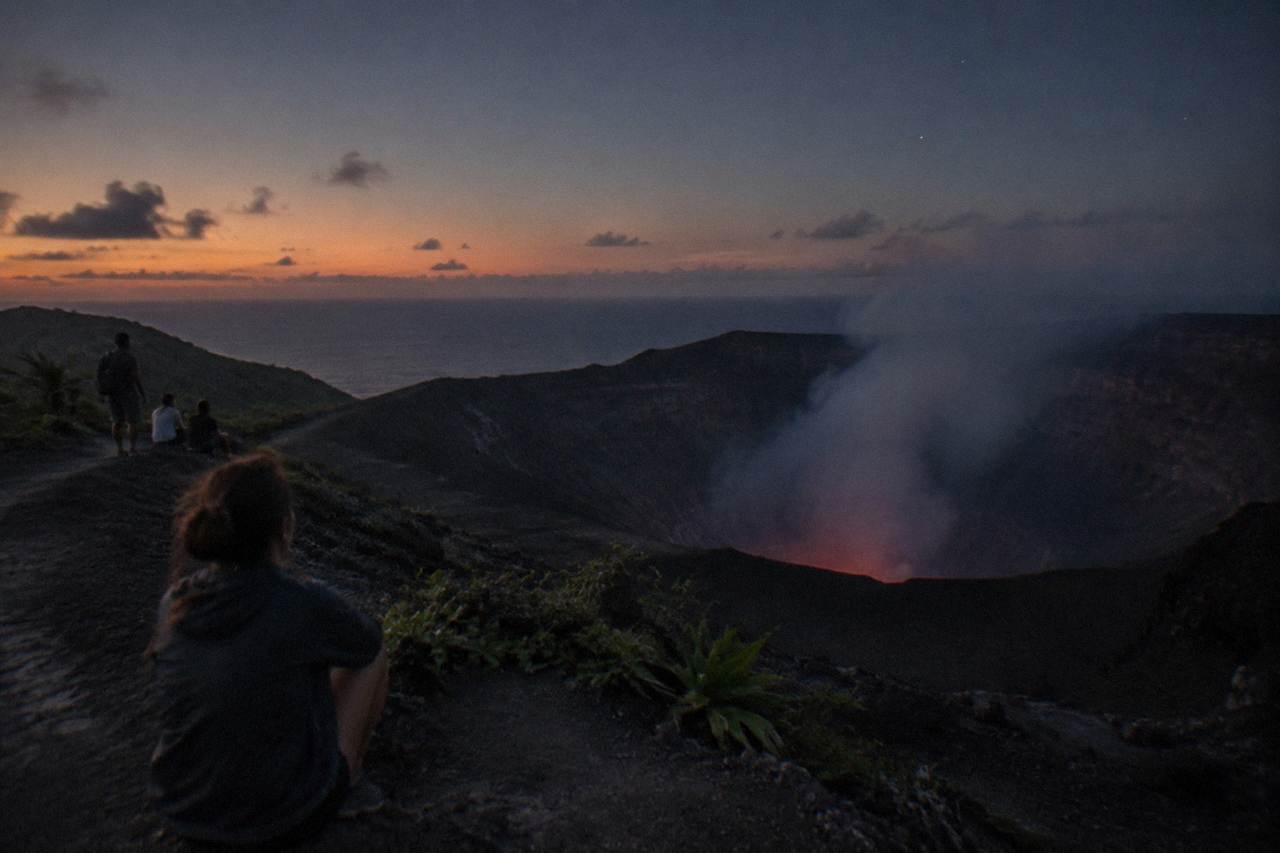
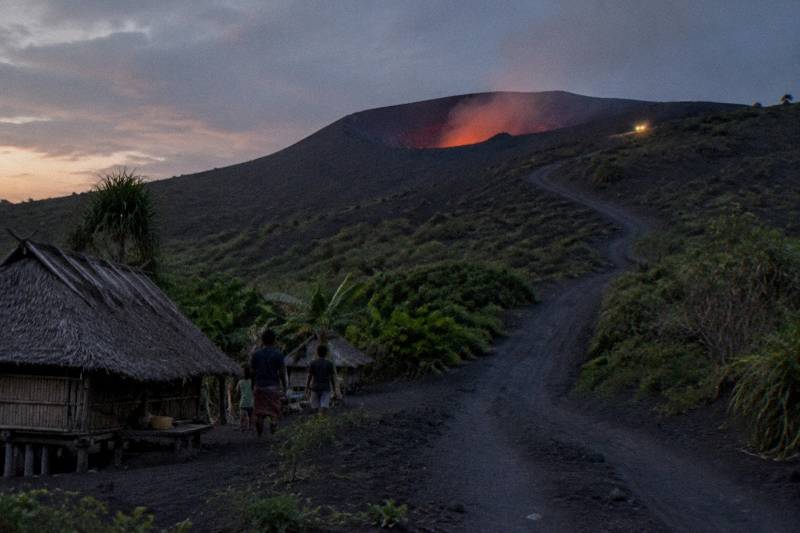
Mount Yasur has been erupting more or less continuously since 1774, which is exactly why people go. The Vanuatu Meteorology and Geohazards Department describes it as a 361 metre scoria cone with a 400 metre summit crater, and its record of near-continuous activity stretches back to the year Captain Cook watched the glow from sea and named the island's fire. Very few volcanoes on Earth let ordinary visitors stand at a crater rim the same week they book a flight. That accessibility is the whole appeal, and it is also the reason the safety question deserves a real answer rather than a shrug.
The short version: yes, visits run, and they run under an official monitoring system with rules attached. The Vanuatu Meteorology and Geohazards Department, or VMGD, watches Yasur on a published alert scale from 0 to 5, and access on the ground is managed locally with licensed guides who can call off a visit if activity rises. Nobody should treat that as a guarantee of anything on a given day, and no honest writer will promise you lava, explosions or a show. What follows is what the official sources actually say, how the guided system works, and where the genuine risks sit.
Is It Safe To Visit Mount Yasur?
Yes, in that visits are permitted, officially monitored and guided, and have run for years under a standing alert level; and no, in that this is a live volcano whose alert status can change quickly. VMGD currently lists Yasur at Alert Level 2, Major Unrest, a level that can include explosions ejecting material beyond the crater. The answer is conditional: go with a licensed guide, check the current level before you commit, and accept that access can close. To understand what that alert level means in practice, read our guide to whether Mount Yasur is still erupting today.
That is the whole framework in one paragraph, but the details matter. Alert Level 2 has been the standing status for a long time; a geohazards observatory reminder post notes the level has sat at 2 since 2016. The scale exists precisely so that visitors are not relying on folklore or a tour operator's optimism. At Level 2, hazardous activity is possible, including explosions that throw material past the crater edge, and injuries from volcanic debris are possible at lower levels too, per the Australian Government's Smartraveller advice for Vanuatu. The same advice is blunt about the threshold: a Level 3 alert triggers warnings to avoid the summit and nearby areas.
So the practical safety system has three layers. The first is monitoring: VMGD publishes the alert level on its Yasur page, and the level moves when the volcano does. The second is access management: Vanuatu Tourism's volcano guidance states that visits are guided only and that access can close as activity rises. The third is you: reading the level before you fly to Tanna, going with an operator who follows the local rules, and leaving the crater area if a guide says so. None of these layers removes risk, and none of them is secret. They are simply the conditions under which a visit is reasonable. For a wider look at risks beyond the volcano, from health notices to road conditions, our guide to staying safe in Vanuatu covers the practical details.
For travellers whose plan is a guided afternoon at the crater, the roster's featured option is the Check availability link for the Mt Yasur Volcano Afternoon Guided Tour, a roughly seven-hour tour with pickup from hotels on Tanna Island, currently rated 4.9 from 8 reviews, a small pool worth reading in full before booking. Free cancellation up to 24 hours before start is listed, which matters on a volcano itinerary where weather and alert levels can shift a plan late in the day. If the afternoon format does not fit, the same family of options includes a full-day tour that adds the Blue Cave before the volcano, and, for travellers based on Efate rather than Tanna, a full-day island tour as a non-volcano alternative.
What Does The VMGD Alert Level Actually Mean?
VMGD runs a volcano alert scale from 0 to 5, where 0 is normal background activity and 5 is a large eruption; Yasur currently sits at Level 2, Major Unrest, meaning explosions can occur and can eject material beyond the crater. The level is the single most important safety fact for a visitor, it is published online, and it changes when the volcano changes, so check it close to your travel date.
The scale rewards a few minutes of attention, because the numbers carry specific consequences. Vanuatu Tourism's volcano guidance and the Smartraveller page both frame visitor access around the published level, and the geohazards department's own page is the primary source. The table below reads the scale the way a visitor needs to read it.
| Alert level | Official meaning | What it means for a visitor |
|---|---|---|
| 0 | Normal background activity | Visits run under standard guided access |
| 1 | Minor unrest | Visits generally run; monitoring continues |
| 2, Major Unrest | Explosions possible, material can eject beyond the crater | Yasur's current standing level; guided visits run, access managed locally and can close |
| 3 | Localised eruption or heightened risk | Official advice is to avoid the summit and nearby areas |
| 4 to 5 | Major eruption stages | Crater access off the table; follow NDMO and VMGD instructions |
Two honest caveats belong next to that table. First, the level is a monitoring output, not a booking guarantee: VMGD's own bulletins move when the volcano moves, and the department's page is the place to look, not a cached search result. Second, the scale describes the volcano's behaviour, not the full experience of standing at the rim; wind direction, gas and the guide's route on the day all shape what a visit feels like at Level 2. A review from Emily M. on the afternoon tour listing captures the format without overpromising: "Such a rush! Loved every moment. Great 4WD up the hill, then you walk right on the rim of the volcano. So special." That is one traveller's day at the current level, not a forecast of yours.
How Do Guided Visits To The Volcano Work?
Visits to Mount Yasur are guided only, per Vanuatu Tourism's volcano guidance, and access is managed locally on Tanna with licensed guides who decide on the day how far up the volcano a group goes. There is no credible self-guided crater option, and the tour listings on this site all build the guide, the 4WD transfer and the access arrangements into the price. The guide is not decoration; the guide is the safety system.
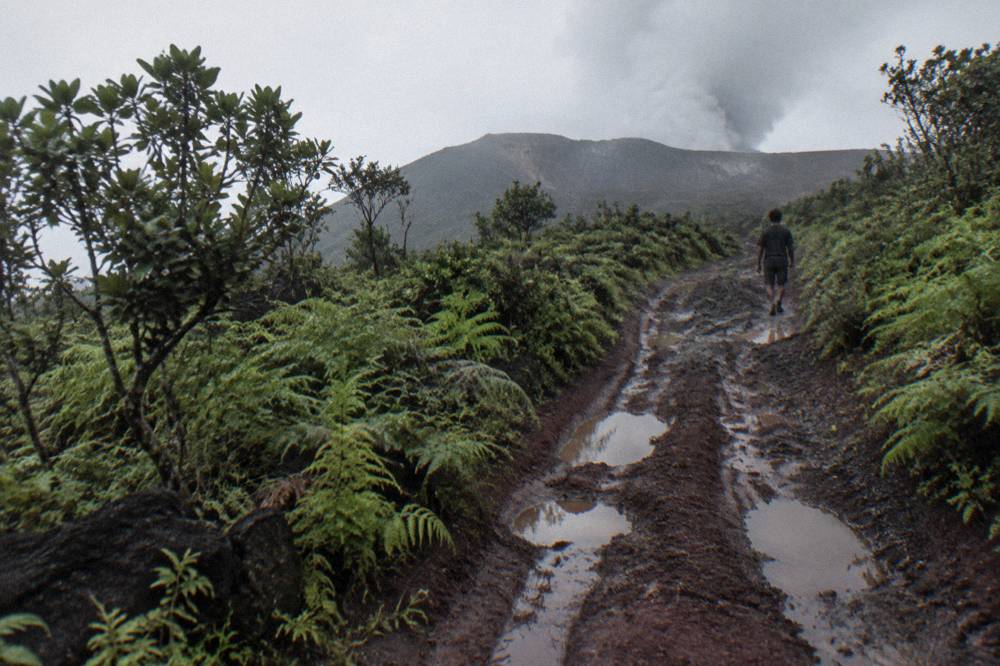
The geography explains the arrangement. Yasur sits at the eastern end of Tanna, reached from the island's west side, where the airport at Whitegrass and most accommodation are, via roads that include the key access route through Kings Cross to Lenakel and the volcano area. That route was upgraded to a fibre-reinforced concrete all-weather road with retaining walls, a project the Ministry of Infrastructure and Public Utilities announced as complete in February 2026, which is a genuine practical improvement for anyone driving to the crater in rain. The final climb is rough ground, and every listed tour uses a 4WD stage followed by a short walk to the rim under a guide's direction.
The roster's Tanna options show how the format varies. The afternoon tour runs about seven hours from Tanna hotels and is built around the crater visit at the best light of day. The full-day Mt. Yasur Volcano tour including the Blue Cave runs six to eleven hours, visits the Blue Cave first and then the volcano, lists lunch, and carries a 4.5 rating from 8 reviews. Both list free cancellation up to 24 hours before start, which on a volcano trip is worth having for reasons beyond price: if VMGD raises the level or a tour operator suspends access, a late change to your day is a real possibility and a refundable booking softens it. If you're still weighing whether the trip justifies the cost and effort, our honest look at whether Mount Yasur is worth visiting covers what the tours include and how to reach Tanna from Port Vila.
What a guide actually does at the rim deserves plain language. Guides read the wind, because gas drifts with it; they position groups on the sides of the crater the local access rules treat as lower risk; they set the pace and the standing distance; and they call the visit off or move the group when the volcano's behaviour steps up. The hazard maps around Yasur carry a permanent exclusion zone within roughly 600 metres of the crater boundary, and the guided routes operate inside a managed framework that respects those boundaries. A visitor who follows a licensed guide is inside a system that has run for decades; a visitor who wanders off route is outside it, and no listing or article can make that safe.
What Are The Real Risks At Mount Yasur?
The documented risks at Alert Level 2 are volcanic debris from explosions, which can eject beyond the crater and injure, volcanic gas, and the ordinary hazards of rough ground at altitude after dark. The official advice frames debris injuries as possible even at lower alert levels, and the level itself can rise quickly. None of this makes a guided visit reckless; it makes a guided visit the only sensible version of one.
Start with debris, because it is the risk the alert scale is built around. VMGD's Level 2 definition names explosions that can eject material beyond the crater, and Smartraveller's Vanuatu page states that injuries from volcanic debris are possible at lower levels and that a Level 3 alert triggers advice to avoid the summit and nearby areas. This is why the guide's positioning matters and why the exclusion zone exists. The volcano's near-continuous activity since 1774 means the crater is always doing something; the question on any given evening is how much, and in which direction the wind carries it.
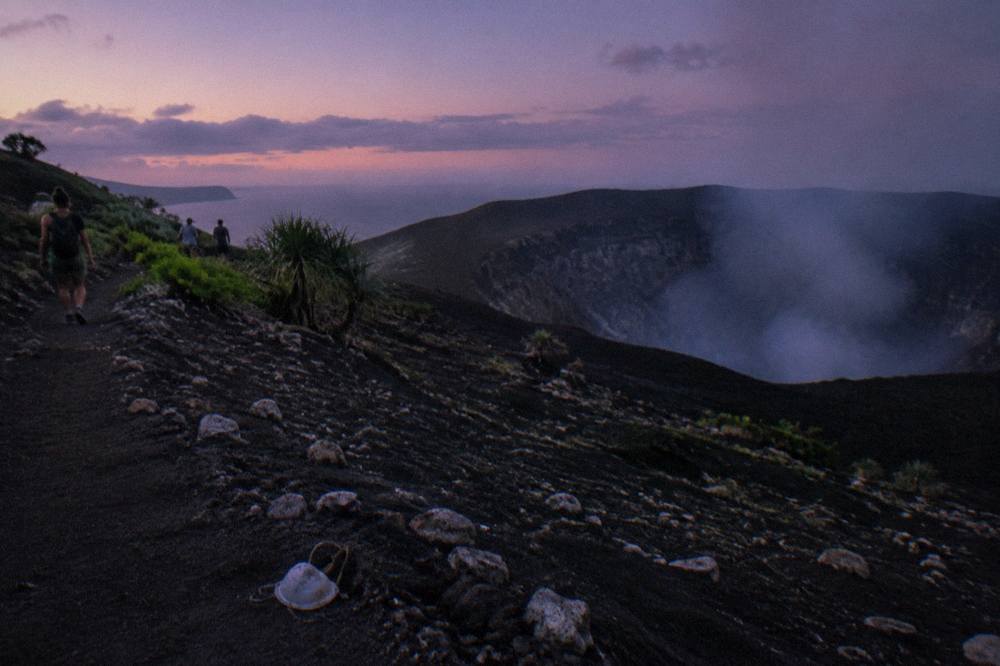
Gas is the quieter risk. Active craters emit sulphur dioxide and other gases, and visitors with asthma or other respiratory conditions should carry their medication and raise it with the operator before booking. Wind direction determines exposure, and a guide will move a group when the drift turns. Then there are the mundane hazards that injure more travellers than volcanoes do: uneven ash slopes, poor footing after rain, and the fact that the best viewing hours are around and after dusk, when the glow shows and the walking is done in low light. Sturdy shoes, a layer for the wind and a hands-free light are the unglamorous safety kit.
One more risk sits outside the volcano entirely and belongs to Tanna as a destination: current traveller advice pages note a dengue outbreak declared on the island, so the standard guidance is to check current health advice before flying, use repellent and cover up at dawn and dusk. The Australian and New Zealand government advice pages for Vanuatu both currently advise exercising normal safety precautions overall, and both note the dengue and pertussis situations. None of that is volcano-specific, but a safety article that stops at the crater rim is only doing half the job.
Is The Journey To Tanna Island Safe?
Getting to Tanna is ordinary Pacific domestic travel: about a 40-minute flight from Port Vila on Air Vanuatu, then road transfers on an island whose main access route was rebuilt as an all-weather road. The flight is short, the road upgrade is real, and the main planning risks are schedule reliability and allowing enough time on the island rather than danger. Book the volcano for a day that is not your arrival day.
The flight time comes from Air Vanuatu's own destination pages, which put Port Vila to Tanna at roughly 40 minutes. That brevity is why the volcano is even a realistic short-trip target: a traveller with three or four days can fly over, do an afternoon at the crater and fly back. The risk worth planning around is not safety but timing. Domestic schedules in a small island network can shift with weather, and a volcano tour booked for the day you land leaves no slack if the flight runs late. Travellers who can spare it should give the volcano day a buffer on either side. More of these guides are collected on Vanuatu Day Tours.
On the ground, the road story has genuinely improved. The Kings Cross access route, which serves Lenakel, Whitegrass Airport, Bethel Wharf and Mount Yasur, was upgraded to a 280 metre fibre-reinforced concrete all-weather road with retaining walls, completed and announced in February 2026. Road works and repairs continue in parts of Vanuatu after the December 2024 earthquake, so the standing advice is to allow extra time on island roads generally. Tanna's volcano route is now one of the better-engineered stretches, which is a fact worth knowing and one that rarely appears in a first page of search results dominated by the crater itself.
For travellers who cannot face the logistics of a second island, the honest alternative is to say so and stay on Efate, where the roster carries a seven-hour Efate Island Full-Day Tour with lunch, rated 4.6 from 46 reviews. It is a different category of day entirely, villages and coastlines rather than a live crater, and it is not a substitute for Yasur; but a traveller who finds the two-island plan stressful is making a reasonable safety-adjacent choice by simplifying the trip.
Who Should Reconsider A Mount Yasur Visit?
Travellers who should think twice include anyone with significant respiratory conditions, because crater gas is real; anyone unwilling to follow a guide's instructions to the letter, because the guide is the safety system; and anyone visiting during a raised alert level, when official advice is to stay away from the summit. Families with very small children and people with limited mobility should also talk to the operator before booking.
The respiratory point first. An active crater emits gas continuously, and exposure depends on wind and how long a group stands at the rim. People with asthma or chronic lung conditions are the clearest case for a pre-booking conversation with the operator, and for carrying inhalers even on a short walk. The listings on this site do not print medical disclaimers beyond standard booking terms, so the responsibility sits with the traveller to raise it, and operators would rather answer the question than manage a preventable problem at 361 metres.
Then the compliance point, which is the least romantic safety advice and possibly the most important. The guided system only protects people inside it. Every documented framework around Yasur, from the VMGD hazard maps to the tourism guidance on licensed guides, assumes visitors stay with a guide, respect the exclusion zone and move when told. A visitor who treats the rim as a photo opportunity with optional rules is choosing the one behaviour the entire safety architecture exists to prevent. If that sentence describes someone in your travel party, the volcano may not be their stop.
Finally, timing. A visit during Alert Level 2 with a guide is one decision; a visit during a Level 3 event is another thing entirely, and official advice at that level is to avoid the summit and nearby areas. This is why the standing instruction in every version of this answer is the same: check the VMGD Yasur page close to your date, and rebook or cancel if the level has moved. Every roster listing on this site carries free cancellation up to 24 hours before start, which exists partly for exactly this scenario. Cyclone season, November to April, adds a second timing layer: tours run at the operator's discretion, and a wet-season plan should carry a spare day.
What Do Travellers Say About The Volcano Tour?
The review pool for Tanna volcano tours is small but positive: the afternoon tour holds 4.9 from 8 reviews and the full-day Blue Cave tour 4.5 from 8 reviews, honest numbers that should be read as a handful of experiences rather than a verdict. The verbatim reviews describe the format accurately, a 4WD climb and a walk to the rim, without promising any particular volcanic behaviour on the day.
Small review pools cut both ways. Eight reviews cannot hide a pattern of problems the way a thousand can, but eight reviews also cannot prove a consistent experience, and this site's policy is to print the count beside the rating for exactly that reason. What the reviews do offer is texture. The Emily M. review quoted earlier, "Such a rush! Loved every moment. Great 4WD up the hill, then you walk right on the rim of the volcano. So special.", describes the mechanics of the visit plainly: vehicle, walk, rim. It does not promise eruptions, lava or any specific display, which matches how an honest article has to frame an active volcano.
The full-day option's listing tells its own story: Blue Cave in the morning, the volcano later, lunch listed, six to eleven hours depending on how the day is sequenced. That wide duration range is itself useful information, a signal that a Tanna day tour is not a precision-timed product but a flexible one, which suits a volcano and slightly argues against booking one on a tight flight day. Between the two Tanna options, the choice is mostly about time and appetite: the afternoon tour is the focused volcano visit, while the full-day version trades focus for variety.
For readers who want the broader Tanna picture beyond the crater, the guides on this site cover the island's options in more depth, including what you can do on Tanna Island and whether the island justifies the extra flight in is Tanna Island worth visiting. The volcano is the headline, but it is not the only reason people make the trip, and a safety decision is easier to make when the alternative uses of the day are visible.
How Do You Book A Safe Yasur Visit?
Book a guided tour rather than arranging your own access, check the VMGD alert level in the days before you fly, choose a date with schedule slack around it, and prefer listings with free cancellation up to 24 hours before start, which every Tanna option on this site carries. Then follow the guide at the rim without exception. That four-step sequence is the entire safe-booking method.
The steps are boring on purpose. First, the operator: both Tanna volcano listings on this site include hotel pickup on Tanna, a guide and the access arrangements, which removes the hardest part of independent planning. Second, the alert level: the VMGD Yasur page is the primary source, and it should be read in the same week as the tour, not the month before. Third, the date: give the volcano day a buffer on either side of your flights, because a 40-minute hop can still be delayed by weather in a small network. Fourth, the terms: free cancellation up to 24 hours before start is listed on both Tanna tours, and it converts an alert-level change from a financial problem into a scheduling one.
For the wider safety picture around a Vanuatu trip, government advice pages are the right background reading. The Australian Government's Smartraveller page for Vanuatu currently advises exercising normal safety precautions and carries the volcano and health notes used throughout this article, and New Zealand's SafeTravel advice says the same in its own framing. Neither page tells you not to go to Tanna; both pages tell you to go informed, which is the same conclusion this article reaches from the volcano side. The planning context, including when not to travel, is covered in the site's guide on when not to go to Vanuatu, and the broader island picture sits in the Vanuatu travel guides for Tanna.
A closing note on what safety means here. No article, operator or monitoring body can promise that a volcano will perform, that the weather will hold or that the alert level will stay put, and this site will not pretend otherwise. What a traveller can control is choosing the guided format, reading the official level, booking refundable terms and behaving at the rim as if the exclusion zone means something, because it does. Mount Yasur has been letting people stand at the edge of the Earth's longest-running show under managed conditions for decades. The visitors who treat those conditions seriously are the ones the system was built for.
Common Questions About Visiting Mount Yasur
Is It Safe To Visit Mount Yasur?
Visits run under an official monitoring and guided-access system. VMGD currently lists Yasur at Alert Level 2, Major Unrest, which can include explosions ejecting material beyond the crater, and Vanuatu Tourism states access is guided only and can close as activity rises. Going with a licensed guide and checking the current level before you book is the condition under which a visit is reasonable.
What alert level is Mount Yasur at right now?
VMGD currently lists Yasur at Alert Level 2, Major Unrest, a status the geohazards observatory notes has held since 2016. The level is published on the VMGD Yasur page and can change quickly, so check it close to your travel date rather than relying on any article, including this one.
Can you visit Mount Yasur without a guide?
No. Vanuatu Tourism's volcano guidance states that visits are guided only and that access is managed locally with licensed guides. The guide handles the 4WD approach, the route at the rim and the decision to move or call off the visit if activity rises, and the permanent exclusion zone within roughly 600 metres of the crater boundary applies regardless.
Is Mount Yasur still erupting?
VMGD records near-continuous activity since 1774, with the most recent listed eruption in its record being vulcanian explosions with ash on 21 to 23 October 2021. At the current level the volcano is considered in a state of major unrest rather than in a named eruption, and no one can promise a particular display on any given day.
What happens if the alert level rises before my tour?
Access can close as activity rises, and at Level 3 the official advice is to avoid the summit and nearby areas. Every Tanna tour listing on this site carries free cancellation up to 24 hours before start, so a raised level converts to a refund or a reschedule rather than a lost booking. Check the VMGD page in the days before you fly.
Are there health risks on Tanna besides the volcano?
Current traveller advice pages note a dengue outbreak declared on Tanna, so check current health advice before flying, use repellent and cover up at dawn and dusk. Crater gas is also a consideration for anyone with asthma or a respiratory condition, who should raise it with the operator before booking and carry their medication.